
Conversations, Tools & Resources For A Clearer Path Forward
Explore conversations about mental health, ADHD, burnout, chronic pain, nervous system health, relationships, and the experiences that shape how we think, feel, and move through the world.
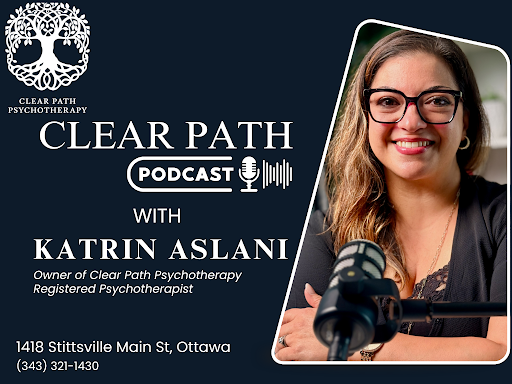
S1 Ep1: Burnout Is Not A Personality Trait
We share the personal crash that led to Clear Path Psychotherapy, from “busy but good” high achievement to a full-body shutdown that forced real change.
Along the way, we connect burnout, chronic pain, endometriosis, ADHD in women, nervous system health, and why whole-human support matters.
In This Episode
- The moment “success on paper” hides real suffering
- Endometriosis and chronic pain as an invisible load
- Burnout that looks like productivity until it does not
- COVID stress as the tipping point for shutdown
- Guilt cycles that keep high achievers stuck
- Therapy as an ally and a turning point
- Returning to school at 38 while navigating ADHD
- Discovering ADHD after burnout and missed signs in women
- Polyvagal theory, the vagus nerve, and nervous system regulation
- Why medication can help but is not the whole plan
- Building an integrative clinic with collaborative care
S1 Ep2: What To Do After An Adult ADHD Diagnosis
An adult ADHD diagnosis can feel like a plot twist that finally explains years of overwhelm, perfectionism, self-criticism, and wondering why life has often felt harder than it should.
In this episode, we talk about what can actually help after receiving the diagnosis – including assessment options, medication limitations, nervous system regulation, and practical ADHD-friendly strategies that help turn shame into understanding and action.
In This Episode
- Adult ADHD And The “Now What?”
- Relief And Grief After Receiving New Context
- Women, Masking And Late ADHD Diagnosis
- Assessment Options And Finding The Right Help
- Medication, Comorbidity And Deeper Healing
- Somatic Therapy And Nervous System Regulation
- Body Check-Ins And ADHD Warning Signs
- Body Doubling, Habit Stacking And Movement
- The Five-Minute Rule For Task Paralysis
- Rewriting Your Story After An ADHD Diagnosis
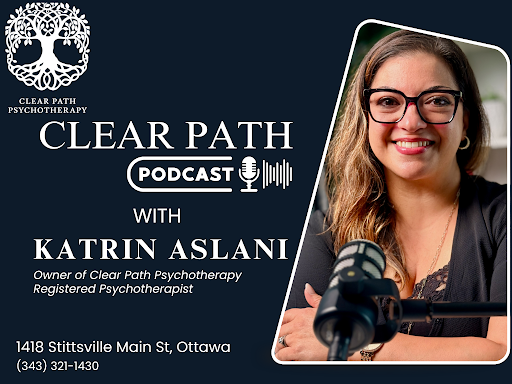
S1 Ep3: When Your Body Won’t Calm Down
You can understand trauma, ADHD, anxiety, burnout, or chronic stress and still feel completely stuck – because insight alone does not automatically regulate the nervous system.
In this episode, we explore why anxiety can be a full-body experience, how the nervous system continually scans for safety, and why your body may stay activated even when your mind is telling you that nothing is wrong.
In This Episode
- Why Insight Can Still Leave You Feeling Stuck
- Anxiety As A Full-Body Signal
- A Simple Body Scan Check-In Exercise
- How Your Nervous System Asks “Am I Safe?”
- Sympathetic And Parasympathetic States
- The Gas Pedal Vs. Brake Pedal Analogy
- Amygdala Overdrive And Hypervigilance
- Polyvagal Theory Made Simple
- Creating A Personal Safety Inventory
- Somatic Therapy And ADHD Regulation
- Using A Feeling Wheel To Name Emotions
- Chronic Pain And Nervous System Protection
- The 60-Second Reset Grounding Tool
S1 Ep4: What If Your Patterns Are Protection?
Trauma can shape our lives even when we cannot recall every detail, because the nervous system can store the past through sensations, urges, protective responses, and survival roles.
We explore why familiar relationship dynamics can repeat, why familiarity can sometimes feel like safety, and how patterns such as people pleasing, perfectionism, fixing, freezing, or fleeing may have developed as ways to protect us.
We also look at practical tools that can help create more space between a trigger and the story our brain immediately tells, while exploring somatic therapy, EMDR, and nervous system regulation.
In This Episode
- 0:00 Trauma Without Full Memories
- 1:48 When Trauma Is What Was Missing
- 3:13 Your Nervous System Predicts Danger
- 6:14 Familiarity Shapes Relationship Choices
- 10:21 The Pause Between Trigger And Story
- 11:08 Body-Based Healing With EMDR
- 12:42 The Safety Statement Breath Tool
- 15:00 Patterns Aren’t Permanent
S1 Ep5: The Awkwardness Of Pause
Your phone is not stealing your attention because you are weak. Your brain is doing exactly what it was designed to do: chase rewards.
In this episode, Katrin explores the dopamine cycle behind scrolling, overworking, online shopping, notifications, and the restless feeling that there is never enough time.
We also look at how nervous system regulation, somatic therapy, polyvagal theory, ADHD time blindness, boredom, and intentional pauses can help us build a healthier relationship with attention and stillness.
In This Episode
- 0:00 Meaningful Moments Versus The Next Hit
- 2:43 Dopamine Is Wanting, Not Happiness
- 4:36 The Power Of Unpredictable Rewards
- 6:05 How Modern Life Sells Attention
- 7:32 A Sensory Walk To Reset
- 9:50 Tiny Notifications Train The Brain
- 10:55 The Five-Minute Pause Challenge
- 12:45 Boredom Builds Creativity
- 15:27 The Time Loop And Fragmented Focus
- 16:44 ADHD Time Blindness In A Digital World
- 18:17 Somatic Therapy And Body Signals
- 19:56 Polyvagal Safety And Stress States
- 22:05 Regulation Habits That Actually Help
- 25:37 Final Reflections And Listener Ask
S1 Ep6: Seventeen Tabs Later, Nothing’s Done
You can be intelligent, motivated, and full of good intentions and still struggle to start, organize, or finish everyday tasks. That doesn’t mean you’re lazy.
In this episode of Clear Path Ottawa, psychotherapist Katrin Aslani explores the science behind executive functioning, ADHD, dopamine, and the prefrontal cortex — the part of your brain responsible for planning, prioritizing, decision-making, impulse control, and emotional regulation.
From opening seventeen browser tabs to forgetting appointments or waiting until the last minute to begin something important, we look at why everyday tasks can feel surprisingly difficult. You’ll also discover three practical, ADHD-informed strategies to help reduce decision fatigue, build momentum, and manage overwhelm with greater self-compassion.
In This Episode
- 0:00 Relatable Signs Of Executive Functioning Struggles
- 1:59 Meet Your Brain’s CEO: The Prefrontal Cortex
- 4:54 ADHD Myths And Executive Functioning Basics
- 7:00 Dopamine And The Motivation Switch
- 8:27 Tool One: Build A Launch Pad
- 9:12 How Stress Can Hijack Your Thinking Brain
- 12:05 Tool Three: The CEO Reset
- 14:05 Moving From Shame To Understanding And Next Steps
Three Tools You Can Try
Build A Launch Pad: Reduce the number of decisions standing between you and starting a task.
Future Me In Five Minutes: Ask what small action your future self would appreciate you completing right now.
The CEO Reset: Use breathing, grounding, and one manageable action to help settle overwhelm and reconnect with your next step.
Watch Episode 7
Explore rejection sensitivity, relationship expectations, emotional triggers, and practical ways to interrupt the loneliness loop.
Download ResourceS1 Ep7: What If The Loneliness Loop Is Self Made?
Ever sent a text, received no reply, and immediately wondered whether you had done something wrong? For people experiencing rejection sensitivity, even small moments of uncertainty can feel emotionally overwhelming.
In this episode of Clear Path Ottawa, Katrin Aslani explores rejection sensitive dysphoria (RSD), its connection to ADHD, and why perceived rejection can trigger powerful emotional and physical responses.
We examine how past criticism, nervous system responses, and unspoken relationship expectations can contribute to withdrawal, resentment, overthinking, and isolation. You’ll also learn practical ways to separate facts from assumptions, communicate your needs, and respond with greater clarity instead of reacting from fear.
In This Episode
- 0:00 When A Text Gets No Reply
- 4:03 What Rejection Sensitive Dysphoria Really Is
- 6:55 ADHD Brain Wiring And Old Emotional Wounds
- 10:45 The Expectation Trap In Relationships
- 14:07 The Loneliness Loop And Withdrawal
- 17:26 Everyday Triggers And Negative Filtering
- 22:10 Why Logic Alone Cannot Always Fix It
- 24:25 Three Tools To Break The Spiral
- 28:56 Resentment, Shame And Rewriting The Script
Three Tools To Try
The Evidence Pause: Separate what actually happened from the meaning your mind has assigned to it.
Communicate Expectations: Replace invisible relationship rules with open conversations about needs and boundaries.
Nervous System Reset: Use breathing, grounding, and orienting techniques to settle your body before responding.
Watch Episode 8
Explore practical strategies for recognizing executive overload, calming your nervous system, and breaking overwhelming tasks into manageable first steps.
Download ResourceS1 Ep8: Executive Overload
Your jaw is tight, your shoulders are tense, and even the smallest task feels impossible. You know what needs to be done, but getting started feels completely out of reach.
In this episode of Clear Path Ottawa, Katrin Aslani explores executive overload and why ADHD can make everyday responsibilities feel mentally and physically exhausting. We examine how the prefrontal cortex, working memory, planning, and emotional regulation interact when cognitive demands exceed our available capacity.
We also explore the connection between overwhelm, avoidance, procrastination, and shame. Through practical somatic techniques and ADHD-informed strategies, you’ll learn ways to recognize the early signs of overload, support nervous system regulation, and make starting feel possible again.
In This Episode
- 0:00 Body Signs Of Hidden Overwhelm
- 3:41 Executive Overload Explained Simply
- 6:43 How Overload Changes Your Self-Talk
- 8:55 Three-Part Somatic Reset Practice
- 13:20 Why Talk Therapy Can Sometimes Feel Overwhelming
- 16:08 The Dopamine Drop Project Cycle
- 18:22 Minimum Viable Action To Get Started
- 21:09 Core Truth And Closing Encouragement
Practical Tools From This Episode
The Physiological Sigh: Take a deep inhale, add a small second inhale, then release a slow, extended exhale.
Horizon Scan & Grounding: Gently look around your environment and use a cross-body squeeze to reconnect with the present moment.
Minimum Viable Action: Make the first step intentionally tiny. Put on your shoes, wash three forks, or write one sentence.
Watch Episode 9
Explore practical ways to recognize overwhelm, support nervous system regulation, and take manageable steps when everyday demands feel too much.
Download ResourceS1 Ep9: What If “Anxiety” Is Actually Your Nervous System Calling For Context?
What if the anxiety, exhaustion, brain fog, and emotional overwhelm you’ve been experiencing aren’t telling the whole story? For many women with ADHD, hormonal changes can add another layer to an already demanding nervous system.
In this episode of Clear Path Ottawa, Katrin Aslani explores the relationship between ADHD, estrogen, dopamine, serotonin, and hormonal changes throughout the menstrual cycle and perimenopause.
We discuss why executive functioning, emotional regulation, and even the perceived effectiveness of ADHD medication may fluctuate across hormonal transitions. We also examine rejection sensitivity, the challenges of navigating healthcare when symptoms overlap, and a practical somatic exercise for reconnecting with your body during moments of stress.
In This Episode
- 0:00 Sarah’s Story And A Common Misread
- 5:06 Estrogen As A Brain Powerhouse
- 8:09 Luteal Phase And Emotional Hijacking
- 10:14 Why Stimulants May Suddenly Feel Less Effective
- 13:49 Somatic Reset For Fight Or Flight
- 18:24 Perimenopause And Identity Freefall
- 23:04 Misdiagnosis When Care Happens In Silos
- 25:20 Next Steps And Closing Reminders
What You’ll Explore
ADHD & Hormones: How changes in estrogen may interact with attention, motivation, mood, and executive functioning.
Recognizing Patterns: Why tracking symptoms across the menstrual cycle or perimenopause may provide useful context for conversations with healthcare providers.
Somatic Regulation: A body-based exercise to help you notice and respond to stress before overwhelm escalates.